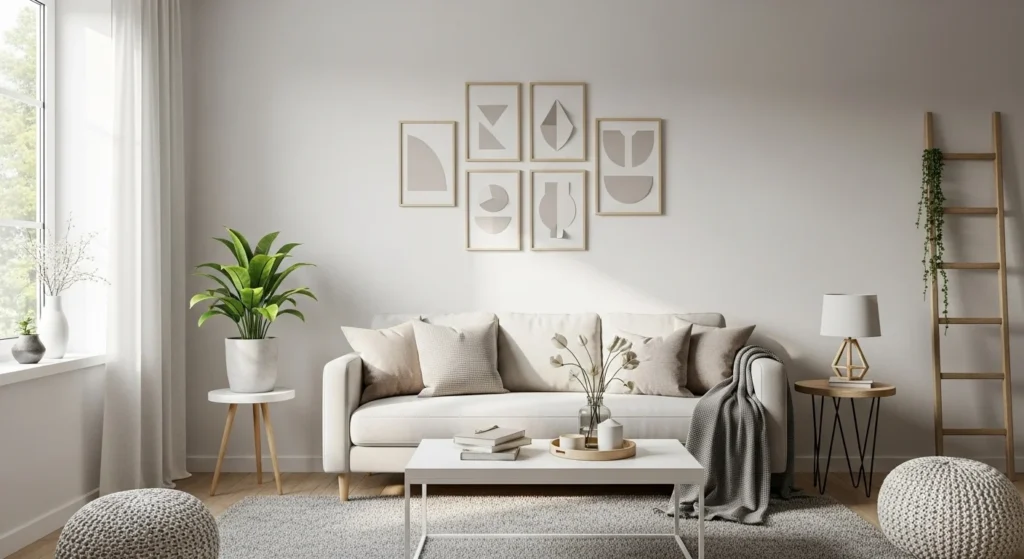
You don’t need to be a painter, illustrator, or “creative type” to make wall art that looks stylish and intentional. Some of the most eye-catching DIY wall art relies on simple shapes, texture, repetition, and smart styling—not drawing talent. If you can cut, tape, arrange, or hang items, you already have what it takes.
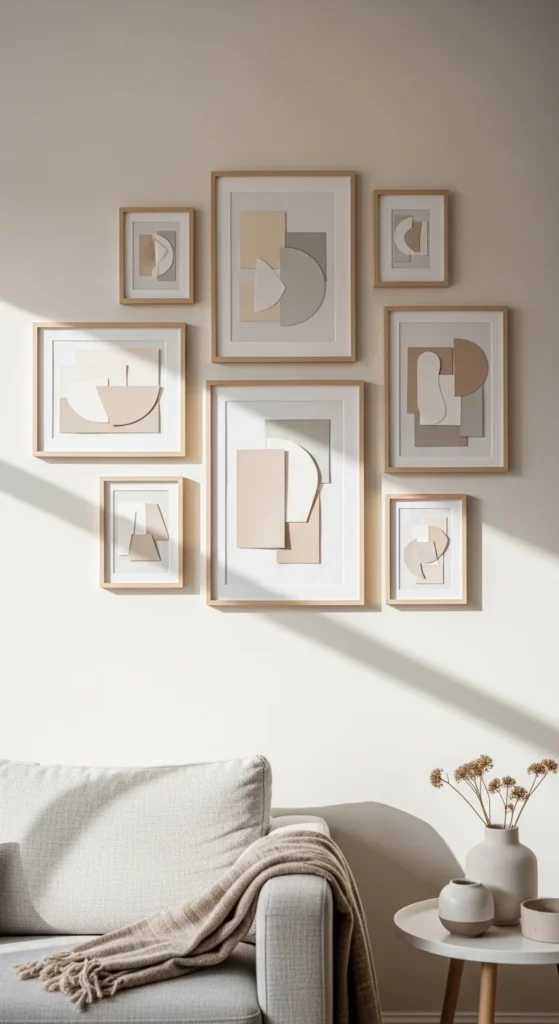
This guide will show you easy, beginner-friendly ways to create DIY wall art using simple materials and clear steps. These ideas are budget-friendly, renter-safe, and perfect for a Pinterest-style home.
Start With the Right Mindset (Not Talent)
The biggest mistake people make is thinking wall art must be hand-painted or detailed. In reality, modern wall decor often focuses on:
- Minimal shapes
- Calm color palettes
- Repetition and symmetry
- Texture instead of detail
Your goal is not to “draw well.” Your goal is to create something that feels balanced and intentional. Once you shift your mindset, DIY wall art becomes much easier and more fun.
Use Pre-Made Shapes to Do the Work for You
One of the easiest ways to make wall art without skills is to let shapes lead the design. You can buy or cut simple shapes and arrange them into a clean layout.
Popular options include:
- Circles, arches, and rectangles cut from cardstock
- Foam board shapes wrapped in fabric
- Wooden shapes from craft stores
Stick to one or two colors for a polished look. Neutral tones, soft pastels, or muted earth colors always photograph beautifully.
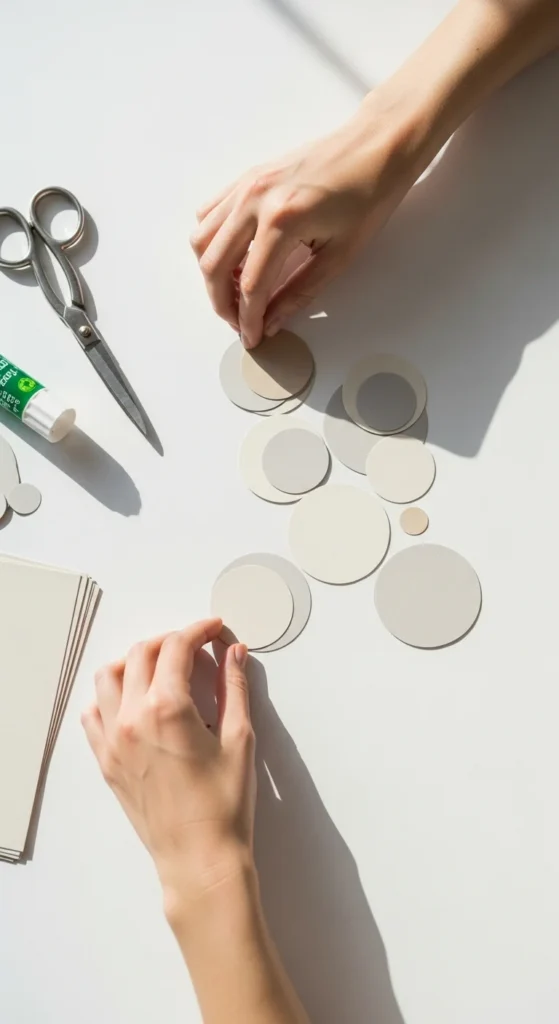
Frame each piece individually or group them as a set of three for instant impact.
Try Abstract Art With Tape (No Painting Skills Needed)
Tape art is a beginner favorite because it creates sharp, clean lines automatically. You don’t need to know how to draw at all.
Here’s how to do it:
- Tape geometric patterns onto canvas or thick paper
- Use a sponge or roller to apply paint
- Peel the tape once dry to reveal crisp shapes
The tape does the hard work for you. Even simple diagonal lines or overlapping squares can look modern and high-end.
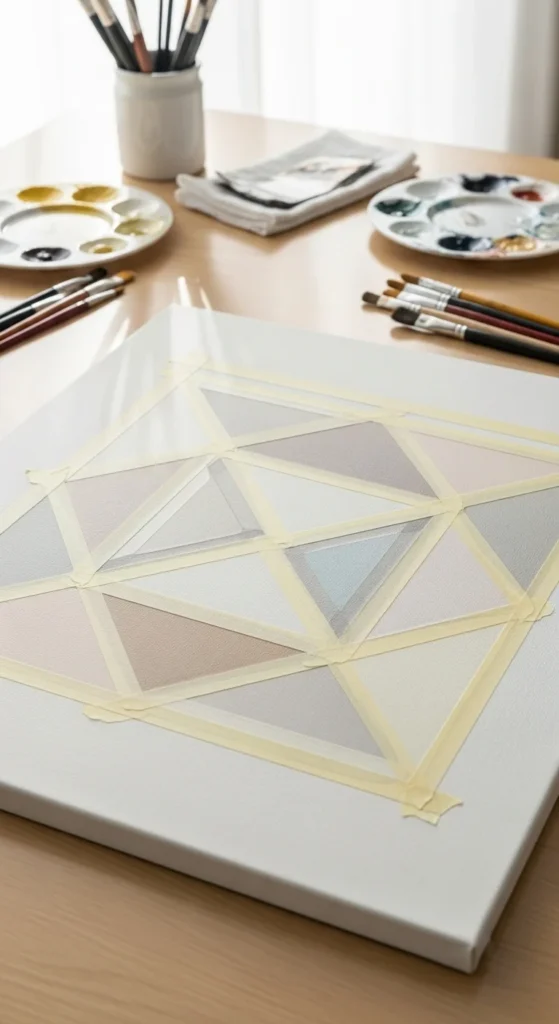
If painting feels intimidating, you can even skip paint and use textured paper or wallpaper samples instead.
Turn Everyday Objects Into Wall Art
Some of the best DIY wall art ideas come from items you already have. When repeated or framed, simple objects feel intentional and artistic.
Easy object-based ideas:
- Fabric swatches or linen napkins
- Pages from old books or sheet music
- Pressed leaves or dried flowers
- Woven placemats or baskets
Mount them in matching frames or hang them with clips for a relaxed, creative look.
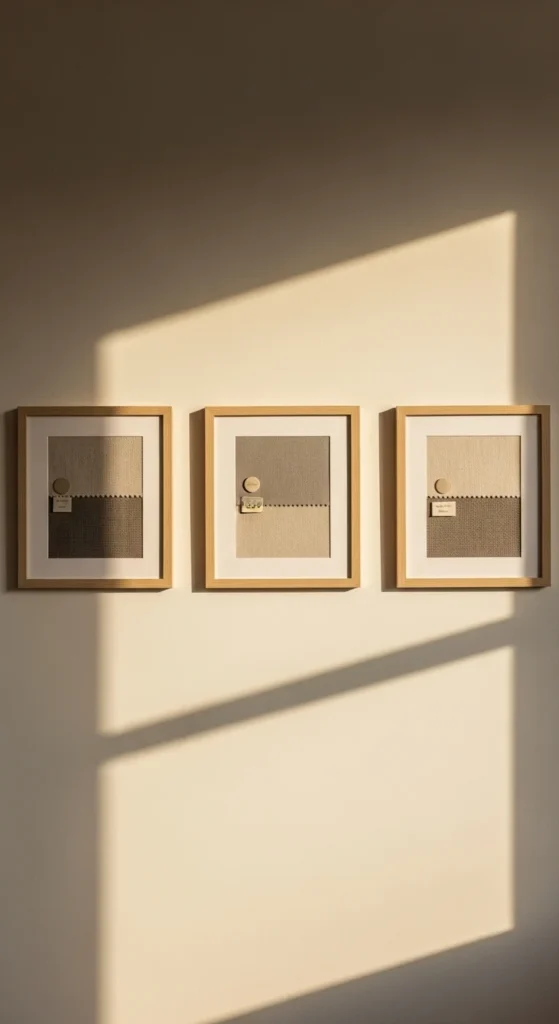
This approach works especially well for large walls where one small artwork feels lost.
Use Texture Instead of Color
If choosing colors feels overwhelming, focus on texture. Texture adds interest without requiring artistic decisions.
Beginner-friendly texture ideas:
- Canvas covered in joint compound and smoothed with a spatula
- Thick paper crumpled gently and flattened
- Fabric stretched tightly over a frame
Stick to one color to keep things cohesive. White, beige, or soft gray textures look calm and timeless.
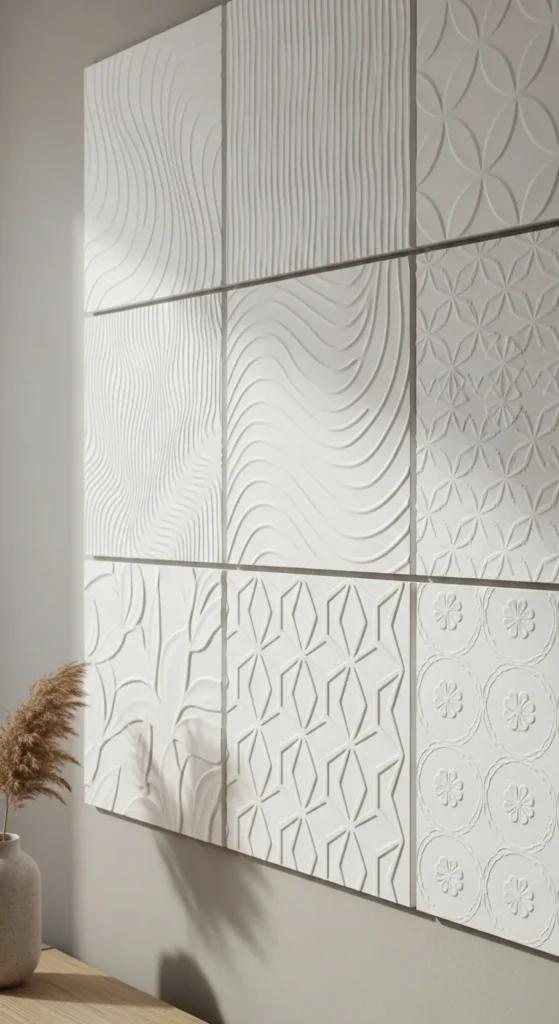
Textured wall art looks especially good in bedrooms, hallways, and quiet sitting areas.
Arrange Art in Sets, Not Singles
Grouping artwork instantly makes it look more professional. Instead of worrying about one “perfect” piece, create a set of simple designs.
Easy groupings include:
- Three similar prints in a row
- A square grid of small frames
- One large piece paired with two smaller ones
Keep spacing even and colors consistent. The repetition makes everything feel intentional—even if each piece is very simple.
Frame Smart for an Instant Upgrade
Frames can make or break DIY wall art. A basic design looks much more polished once framed correctly.
Helpful framing tips:
- Use the same frame style for grouped art
- Choose thin frames for a modern look
- Add a mat to give simple art more breathing room
You don’t need expensive frames. Affordable options still look great when used consistently.
Final Thoughts: Simple Is the Secret
DIY wall art doesn’t require talent—it requires simplicity and confidence. When you focus on shapes, texture, repetition, and clean styling, the result looks thoughtful and stylish without stress.
Start small. Try one project. Hang it up and see how it changes your space.
Save this guide for later, and enjoy creating wall art that feels personal, calm, and beautifully effortless.