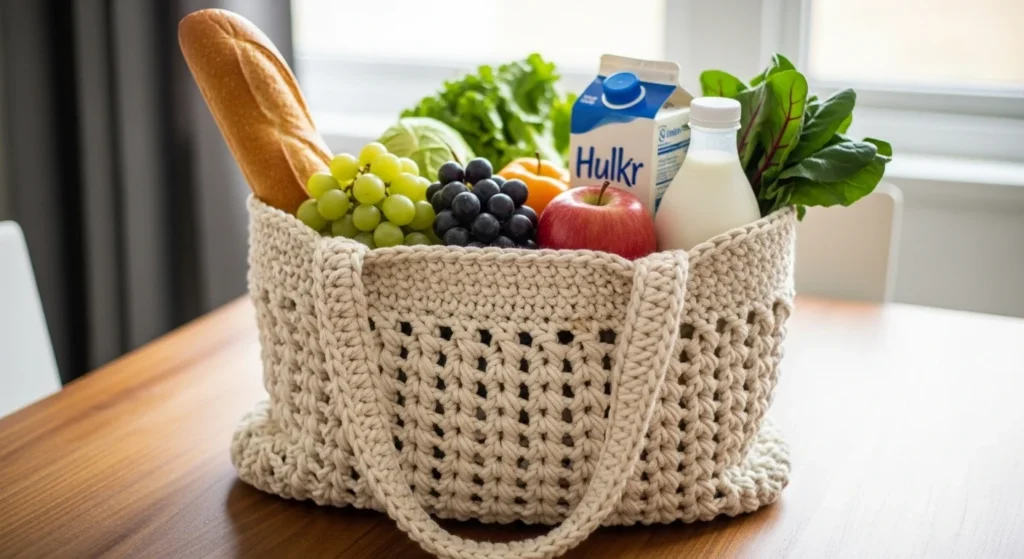
A sturdy crochet tote bag is one of the most useful projects you can make. It carries groceries, books, beach items — and it lasts for years when made correctly. The secret isn’t complicated stitches — it’s smart structure, dense fabric, and the right yarn choices.
If you’ve ever made a bag that stretched or sagged, this guide will fix that. You’ll learn how to build a tote that keeps its shape while still looking cute and handmade.
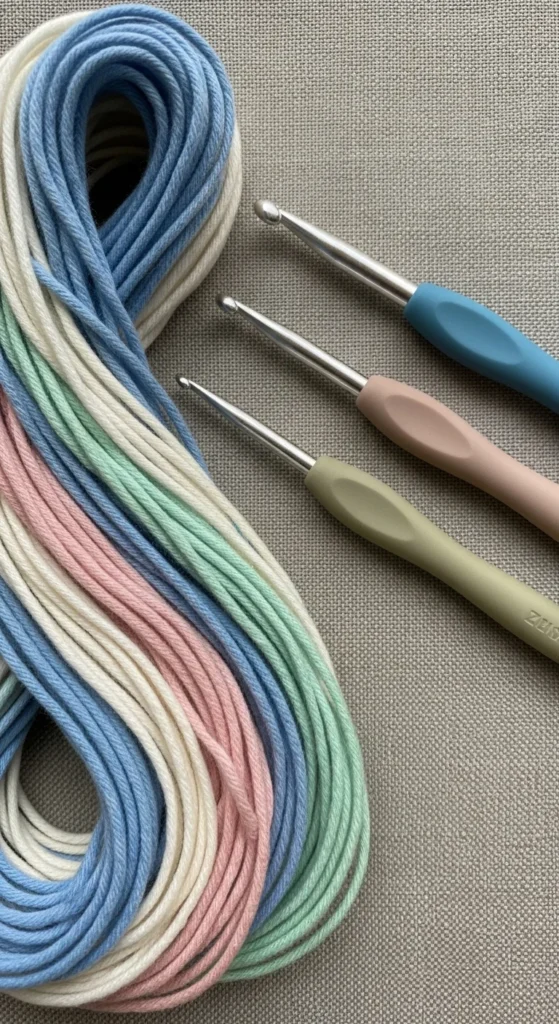
Step 1: Choose Yarn for Strength (Most Important)
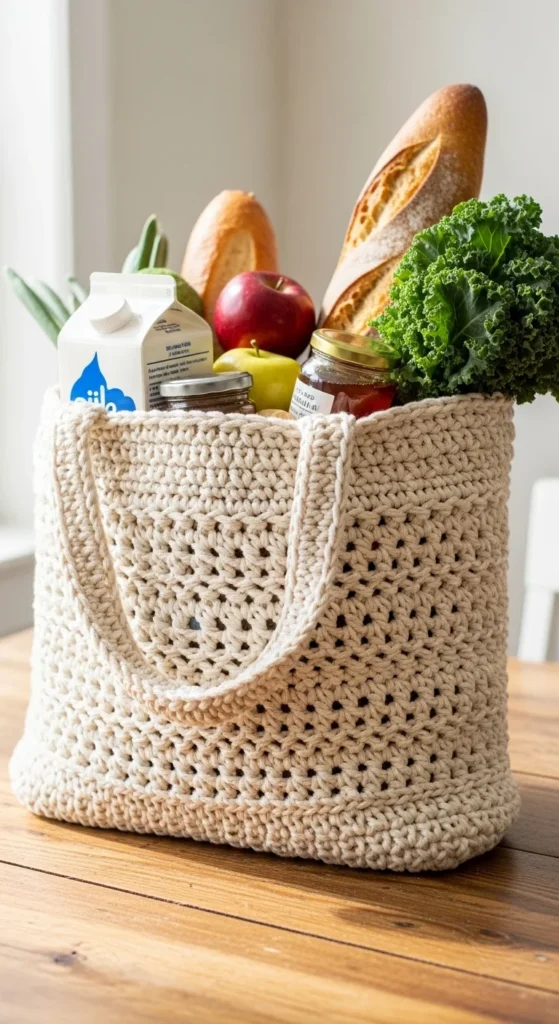
Sturdy bags start with yarn choice — not stitches.
Best yarn types
- Cotton (top choice for durability)
- Cotton DK held double
- Linen blends
- Tubular or chunky yarn for fast structure
Pro technique: multi-stranding
Holding 2–4 strands of worsted yarn together creates bulk without needing super bulky yarn.
👉 Why it works:
- Reduces stretching
- Builds thickness faster
- Improces structure
Yardage guide
- Typical tote: 450–850 yards total
Step 2: Create a No-Sag Base
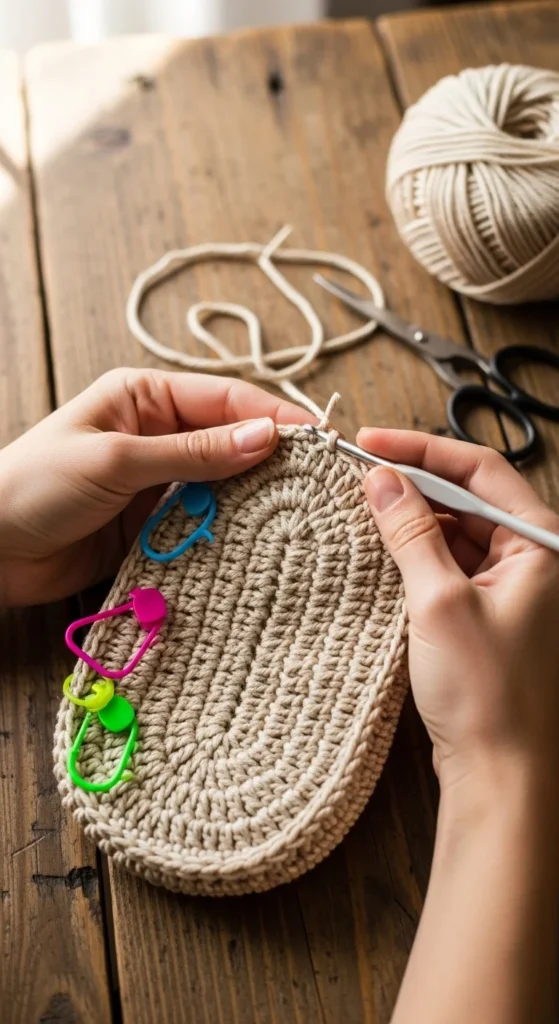
Most sturdy totes begin with a foundation chain worked into an oval or rectangle.
Basic rectangle base
- Chain desired width (usually 20–30 stitches).
- Work single crochet across.
- Continue around both sides.
- Increase at corners.
Popular base shapes
- Rectangle (most beginner friendly)
- Oval (market tote favorite)
- Thermal stitch rectangle (extra dense)
- Magic ring circle (for round bags)
- Origami fold rectangles (structured style)
👉 Tip: Use stitch markers at corners to maintain symmetry.
Step 3: Build Dense Sides That Won’t Stretch
After the base, you crochet upward in continuous rounds.
The key is density.
Best anti-stretch stitches
- Single crochet
- Half double crochet combinations
- Thermal stitch
- Alpine stitch
- Back loop only ribbing
Speed vs structure tip
- Larger hook → faster but softer
- Smaller hook → slower but sturdier
👉 A common pairing: sc + hdc combo for strong everyday totes
Always track rounds with stitch markers — seamless sides look cleaner.
Step 4: Add Depth with Gussets or Short Rows
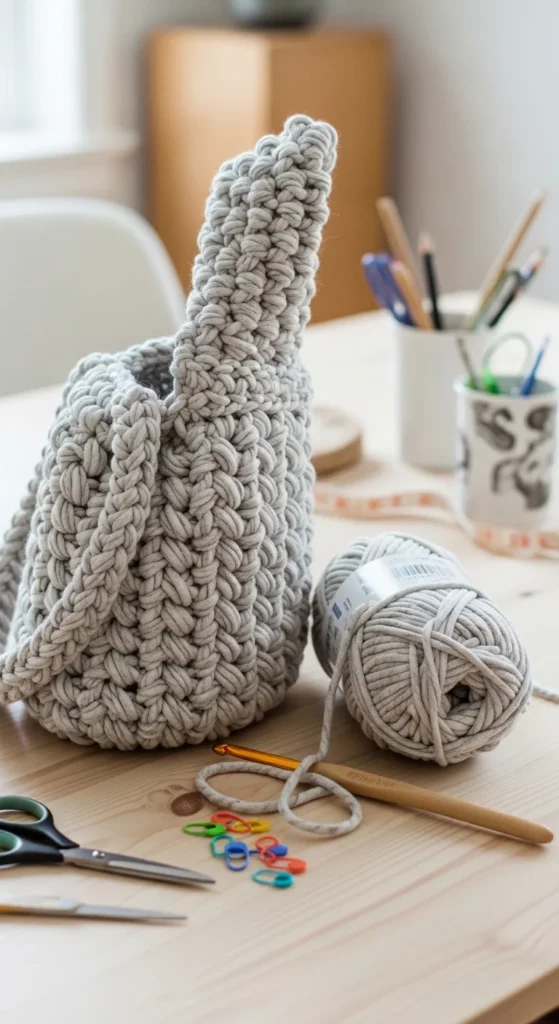
Depth is what makes a tote functional.
Without it, bags collapse.
Ways to add depth
- Crochet gusset panels
- Short row shaping
- Oblong rounds
- Rectangle fold construction
Typical tote size
- Width: 12–16 inches
- Height: 10–14 inches
👉 Market bags benefit most from gussets because they expand for groceries.
Step 5: Create Strong Handles That Last
Handles are the most stressed part of any tote.
Basic handle method
- Chain long strap
- Crochet rows (hdc or thermal)
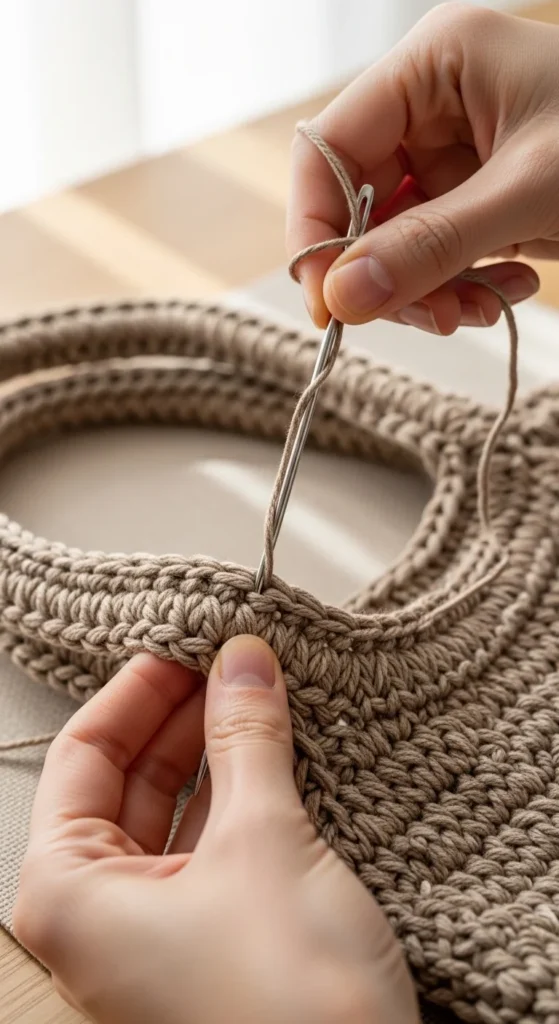
- Sew securely onto bag
Handle strengthening tricks
- Crochet decreases along edges
- Insert braided cord inside
- Reinforce with lining
- Sew multiple attachment rows
- Use buttonhole adjustable straps
Upcycling leather or fabric handles is also popular for structure.
Step 6: Line the Tote for Heavy Loads (Optional but Recommended)
Lining dramatically increases durability.
Benefits of lining
- Prevents stretching
- Protects stitches
- Adds polish
- Supports heavy items
Fabric options
- Cotton canvas
- Quilting cotton
- Felted lining
- Repurposed fabric
👉 Dense stitches + lining = heavy-duty tote.
Step 7: Finish Cleanly (Professional Look)
Finishing separates beginner bags from polished ones.
Clean finish checklist
- Weave ends inside stitches
- Use invisible slip stitch joins
- Block lightly for shape
- Add pockets if needed
- Add embellishments (optional)
Popular upgrades
- Interior pocket panels
- Magnetic closure
- Color blocking
- Tassels
- Surface slip stitch details
Common Mistakes (And Fixes)
Bag sagging
→ Use multi-strand yarn or lining
Bulky tension issues
→ Make a gauge swatch first
Visible seams
→ Try invisible join methods
Handle slipping
→ Sew deeper and reinforce
Uneven shape
→ Count stitches every round
Final Thoughts
Crocheting a sturdy tote bag is all about structure — strong yarn, dense stitches, and reinforced handles. Once you understand these principles, you can design endless variations: market bags, work totes, beach bags, and minimalist everyday styles.
Start simple with a rectangle tote, focus on density, and experiment with multi-strand yarn for professional results.
✨ A well-made tote isn’t just cute — it becomes part of your daily life.
Save this guide and crochet your sturdy tote this weekend. 🧶