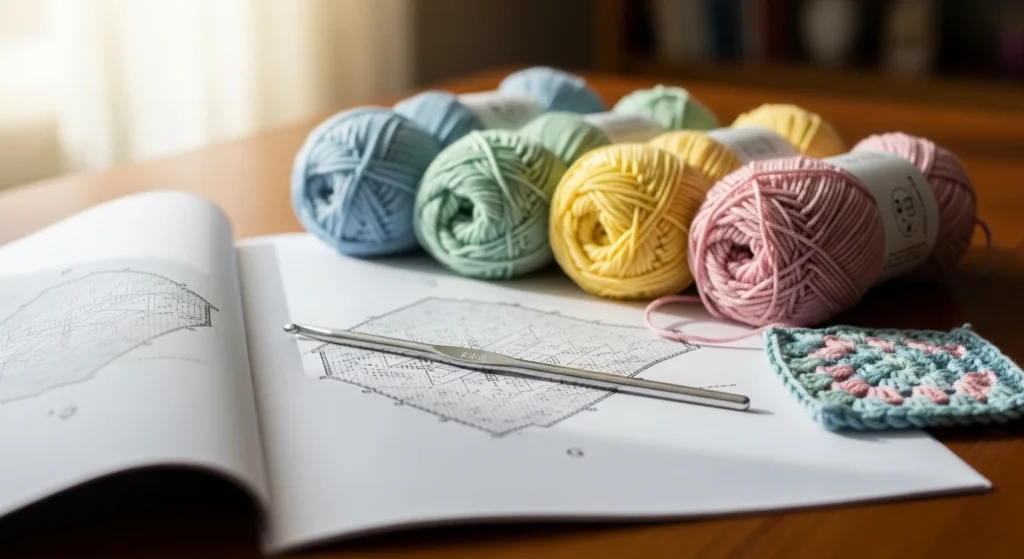
You open a crochet pattern… and suddenly it looks like secret code.
“Ch 2, sc in next 3, *2 dc, ch 1; rep from * across (24 sts).”
If that makes your brain freeze, you’re not alone. Crochet patterns use abbreviations and punctuation as shorthand—but once you understand the system, they become surprisingly predictable.
This guide breaks it down step by step so you can read patterns confidently—without confusion.
Start With the Abbreviation Cheat Sheet
Before you begin any pattern, learn about 20 core abbreviations. That’s it. Most patterns rely on the same small group.
Common ones include:
- ch = chain
- sc = single crochet
- hdc = half double crochet
- dc = double crochet
- sl st = slip stitch
- st(s) = stitch(es)
Organizations like the Craft Yarn Council standardize these terms, so once you learn them, they work across most patterns.
Keep a small cheat sheet nearby. After a few projects, you won’t need it.
The goal isn’t memorizing everything overnight. It’s recognizing patterns. And crochet patterns follow patterns.
Read the Entire Pattern Before You Start
One of the biggest beginner mistakes? Jumping straight to Row 1.
Instead:
- Scan materials
- Check hook size
- Look at gauge requirements
- Read the notes section
Many patterns explain special stitches in the notes. If you skip that, confusion is guaranteed later.
This “full scan strategy” prevents surprises halfway through your project.
Think of it like reading a recipe before cooking. Preparation saves frustration.
Highlight Your Size First
Multi-size patterns often look like this:
Row 1: Ch 28 (32, 36, 40)
Those numbers usually represent different sizes: XS, S, M, L.
If you don’t mark your size, you’ll accidentally switch numbers mid-project.
Use:
- A highlighter
- Washi tape
- Sticky notes
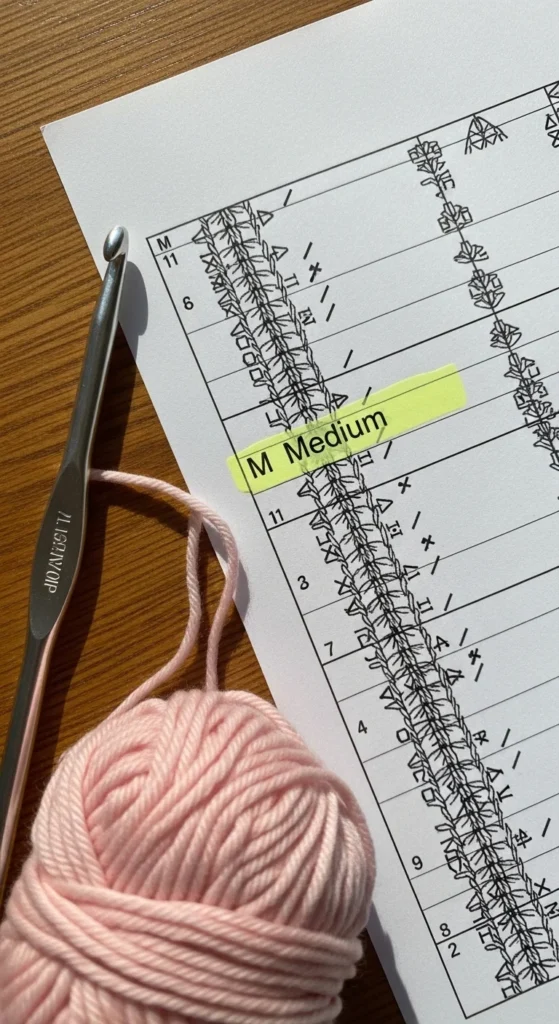
Only follow the numbers for your size. Ignore the rest.
This one habit prevents major sizing mistakes.
Understand What Punctuation Really Means
Patterns aren’t random symbols. They follow sentence-like rules.
Here’s how to decode them:
Commas = “then”
Ch 2, dc in next st
→ Chain 2 then double crochet.
Parentheses () = stitch counts or grouped instructions
(24 sc)
→ You should have 24 stitches at the end of the row.
Sometimes parentheses also show size variations.
Brackets [] = repeat sections
[2 sc, ch 1] 5 times
→ Do that sequence five times.
Asterisks * = repeat from here
*Sc in next 3, 2 sc in next; rep from * to end.
It’s not complicated once you see the pattern. It’s like reading instructions in short sentences.
Always Check the End-of-Row Stitch Count
At the end of many rows, you’ll see something like:
Row 4: … across (36 sts)
That number is your checkpoint.
Before turning:
- Count your stitches.
- Confirm the number matches.
- Fix mistakes immediately.
This simple habit saves hours later.
Counting the small “V” shapes at the top of stitches helps keep things accurate.
Learn Turning Chains (They Matter)
Turning chains often confuse beginners.
Here’s the quick rule:
- Ch 1 for single crochet
- Ch 2 for half double crochet
- Ch 3 for double crochet
Sometimes patterns say the turning chain counts as a stitch. Sometimes it doesn’t.
Always check the notes section.
If edges look slanted or uneven, this is usually why.
Use Stitch Markers for Repeat Sections
When you see brackets or asterisks, place a stitch marker at the start of that repeat.
This helps with:
- Long rows
- Complex repeat sequences
- Round projects
Markers prevent losing your place mid-row.
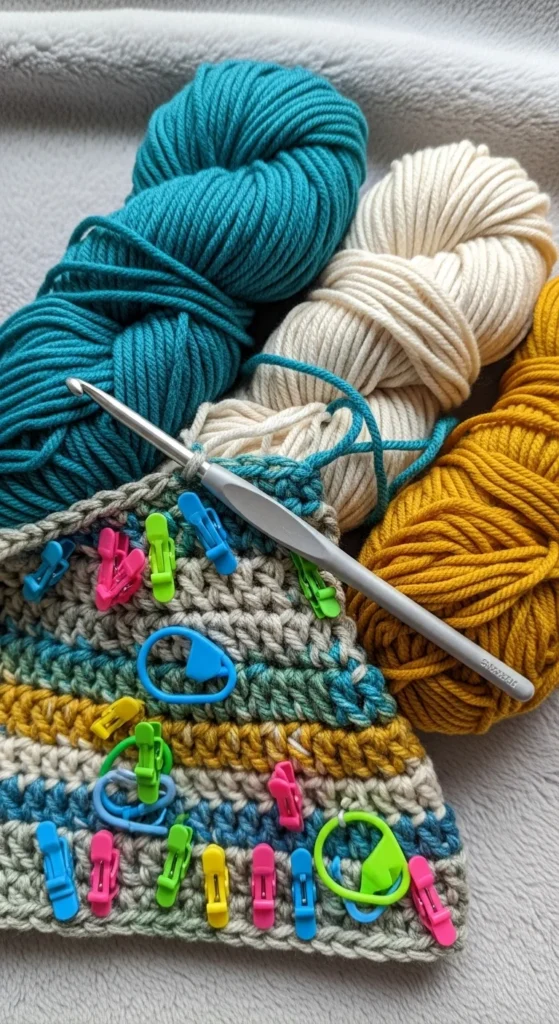
If you don’t have markers, use paper clips or safety pins.
Don’t Skip Gauge Swatches
Gauge may sound intimidating, but it’s simply a test square.
Most patterns suggest a 4×4 inch swatch.
Why it matters:
- Confirms your tension
- Prevents size issues
- Saves yarn
Make a small test square before large projects like sweaters.
It feels like extra work—but it prevents disappointment later.
US vs UK Terms Can Change Everything
This trips up many beginners.
For example:
- US sc = UK dc
- US dc = UK tr
Always check which terminology the pattern uses.
Most patterns specify this at the beginning.
Mixing systems leads to completely different stitch heights.
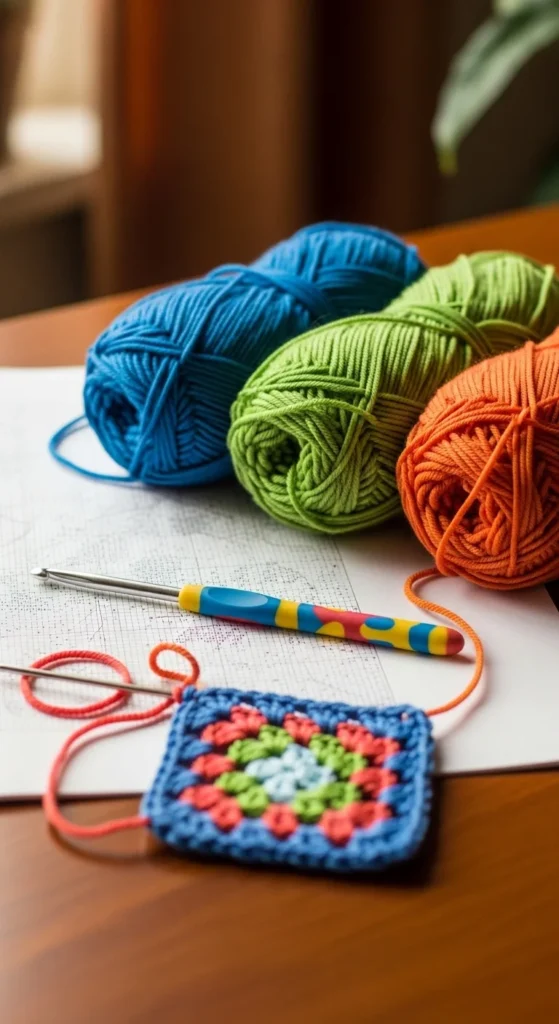
Practice With a Granny Square
If you want a safe place to practice reading patterns, try a granny square.
It includes:
- Chains
- Double crochet
- Repeats
- Stitch counts
- Working in rounds
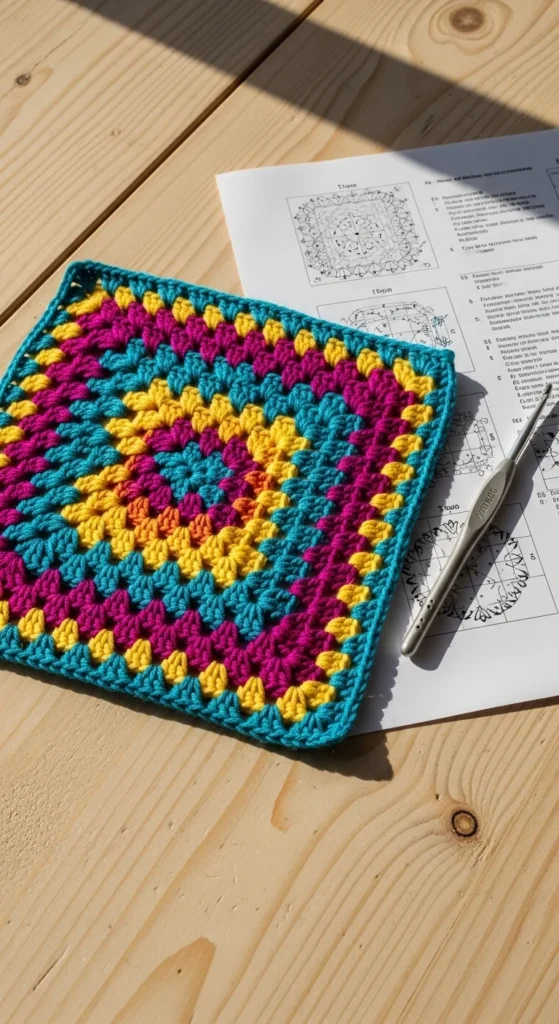
Granny squares are small, forgiving, and repeat-based. Perfect for learning the rhythm of written instructions.
Read Patterns Like Sentences
Here’s a helpful mindset shift:
Patterns are written in steps. Not mysteries.
Break them into chunks.
Instead of reading:
“Ch 3, dc in next 2, *2 dc, ch 1; rep from * to end (48 sts)”
Read it like:
- Chain 3.
- Double crochet in next 2 stitches.
- Repeat this next sequence.
- Confirm 48 stitches.
Slow reading reduces mistakes.
Final Thoughts
Crochet patterns aren’t secret code. They’re shorthand instructions built on simple rules.
Learn the core abbreviations.
Highlight your size.
Decode punctuation.
Check your stitch counts.
With practice, reading patterns becomes second nature.
Print this guide, grab a beginner pattern, and try decoding it today.