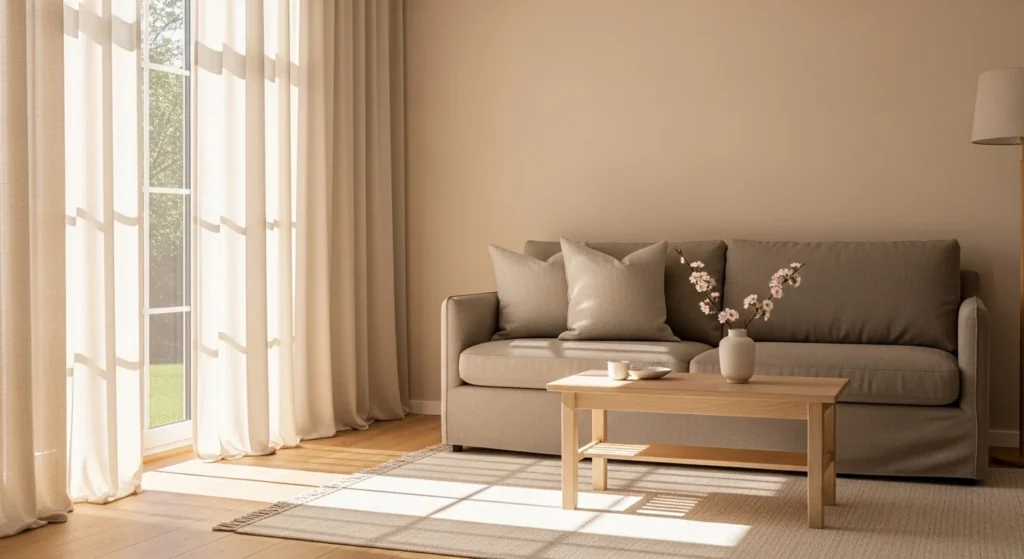
Minimalist decor isn’t about empty rooms or strict rules. It’s about creating a calm, breathable space where every item has a purpose. When done right, minimalist DIY decor can make your home feel lighter, more peaceful, and easier to enjoy—without spending a lot or buying new furniture.
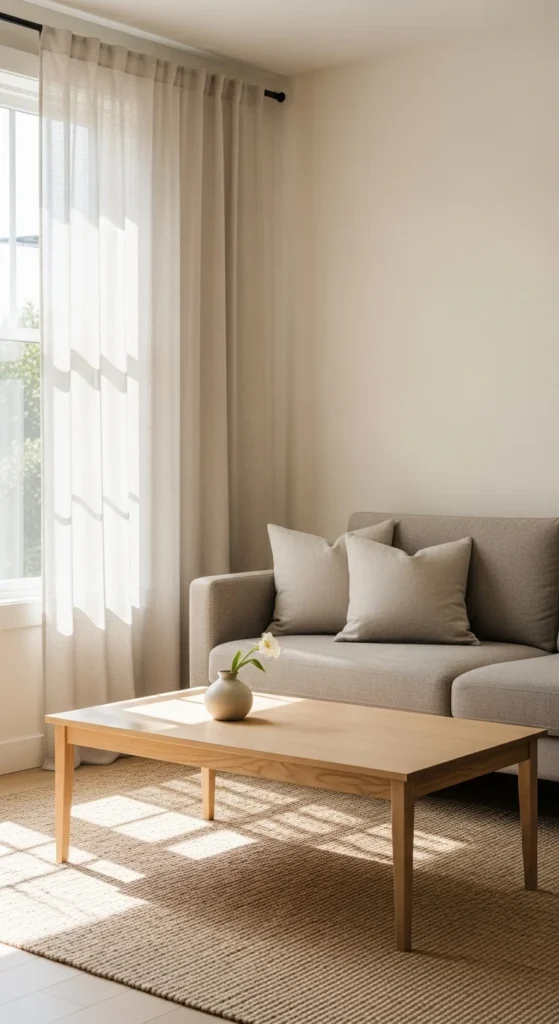
This guide will show you how to create minimalist DIY decor that feels warm and soothing, using simple materials and thoughtful choices you can make at home.
Understand What “Calm Minimalism” Really Means
Before starting any DIY project, it helps to understand the mindset behind minimalist decor. Calm minimalism focuses on simplicity, balance, and comfort rather than stark emptiness.
Key principles to keep in mind:
- Fewer items, but better chosen
- Soft colors instead of harsh contrasts
- Clean lines paired with gentle textures
Minimalism doesn’t mean removing personality. It means letting your favorite pieces stand out without visual noise.
Choose a Soft, Neutral Color Palette
Color plays a huge role in how calm a space feels. Minimalist decor relies on soft, neutral tones that don’t overwhelm the eye.
Stick to:
- White, cream, and warm beige
- Light gray or greige
- Muted earth tones in small accents
You can refresh a space without paint by:
- Sewing or buying neutral cushion covers
- Using light throws over chairs or sofas
- Swapping bold decor for subtle, matte pieces
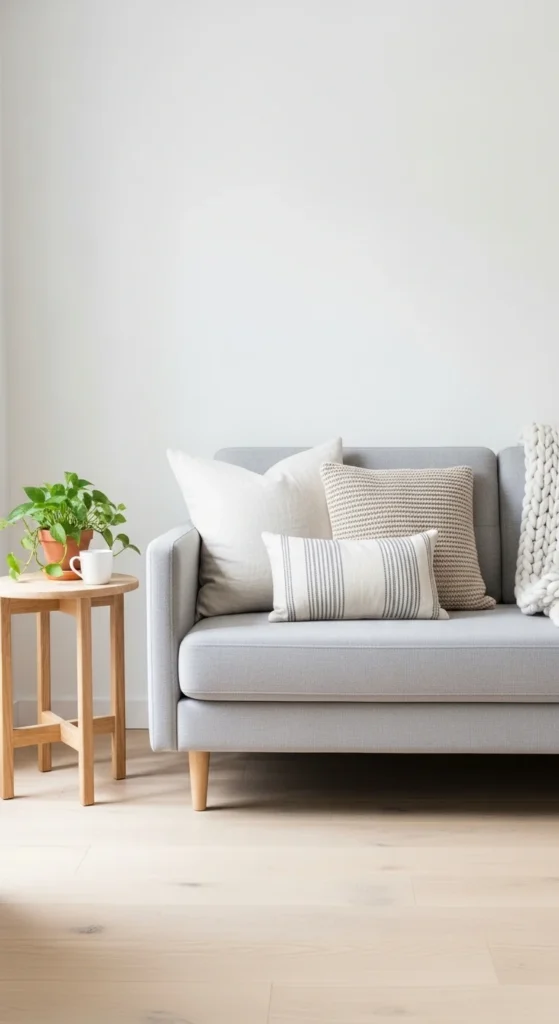
A quiet color palette instantly makes DIY decor feel more intentional and relaxing.
Use Simple Materials for Clean DIY Projects
Minimalist DIY decor works best when materials are natural and uncomplicated. Avoid anything overly glossy, busy, or decorative.
Great minimalist materials include:
- Light or medium-tone wood
- Linen or cotton fabric
- Clay, ceramic, or stone
- Clear or frosted glass
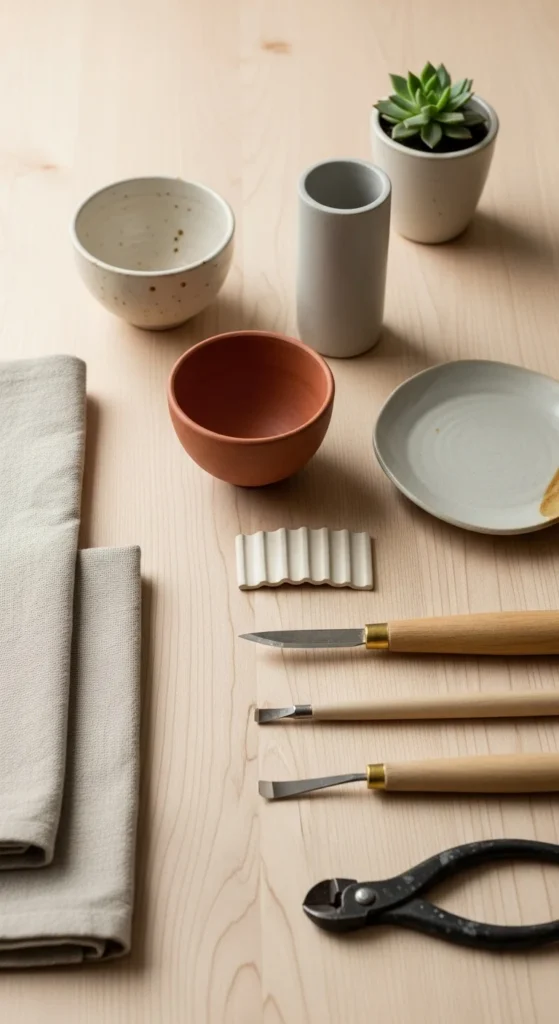
Easy DIY ideas:
- Make a small wooden tray from scrap wood
- Cover old jars with linen for subtle storage
- Create simple fabric wall panels using neutral cloth
The goal is function and beauty working together.
Create Minimalist Wall Decor With Intention
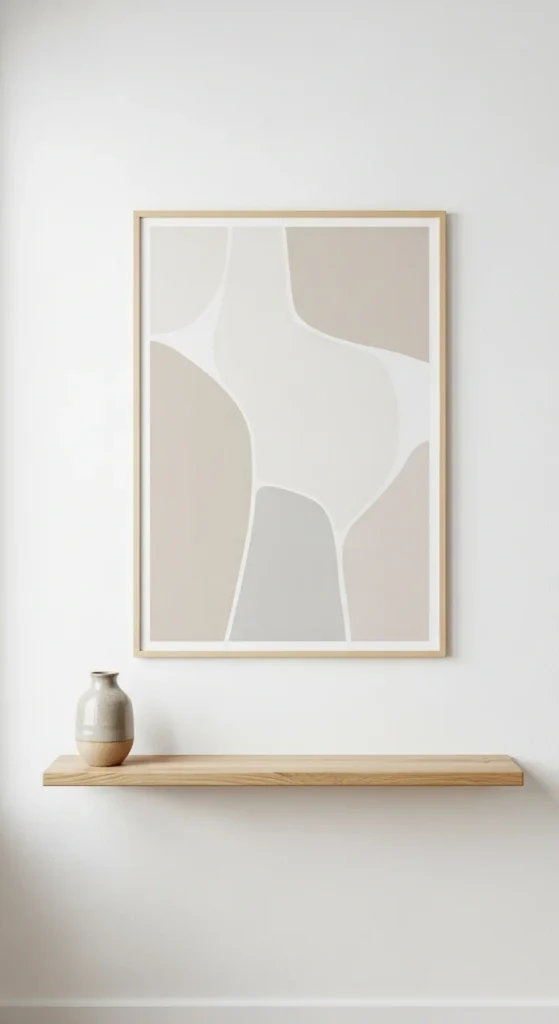
Walls in a calm minimalist home should feel open, not crowded. Instead of filling space, focus on one or two meaningful pieces.
Minimalist wall ideas:
- One large neutral art piece
- A pair of simple frames with soft artwork
- A small wooden shelf with breathing room
DIY wall decor tips:
- Use blank space as part of the design
- Stick to simple shapes and lines
- Avoid busy patterns or heavy frames
If something doesn’t add calm, it doesn’t belong.
Focus on Texture Instead of Decoration
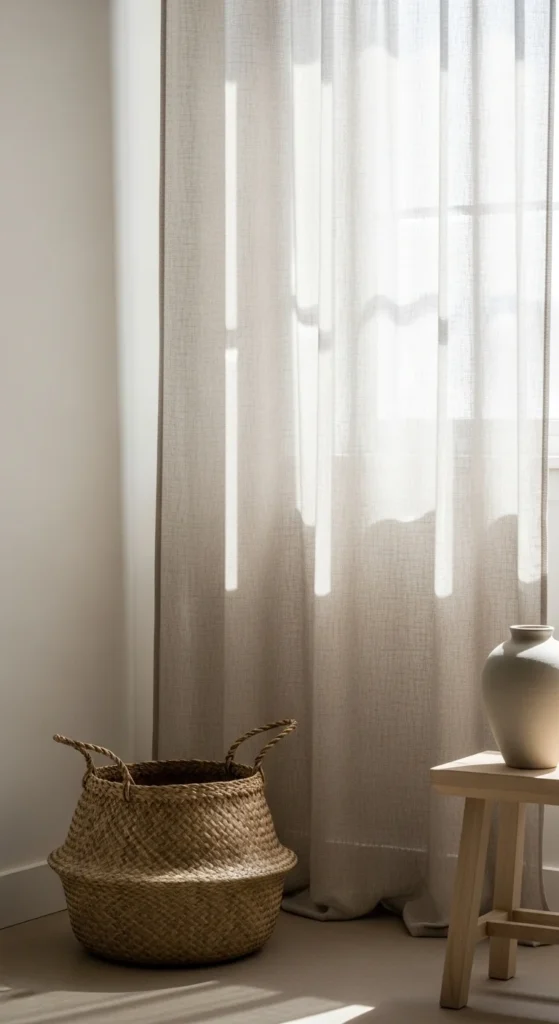
In minimalist decor, texture replaces excess decoration. Subtle texture adds warmth without clutter.
Ways to add texture:
- Linen curtains or pillow covers
- Woven baskets in soft tones
- Matte ceramic or clay pieces
Budget-friendly texture ideas:
- Wrap storage boxes in neutral fabric
- Use simple baskets for organization
- Choose items with a handmade or raw finish
These details make a space feel cozy while staying visually quiet.
Style Surfaces With the “Less but Better” Rule
Minimalist styling is all about restraint. Each surface should have only a few items, carefully chosen.
When styling tables or shelves:
- Use 1–3 objects per surface
- Mix height and shape gently
- Leave open space around items
Good minimalist decor pieces:
- A small plant or branch
- One book or stacked pair
- A single sculptural object
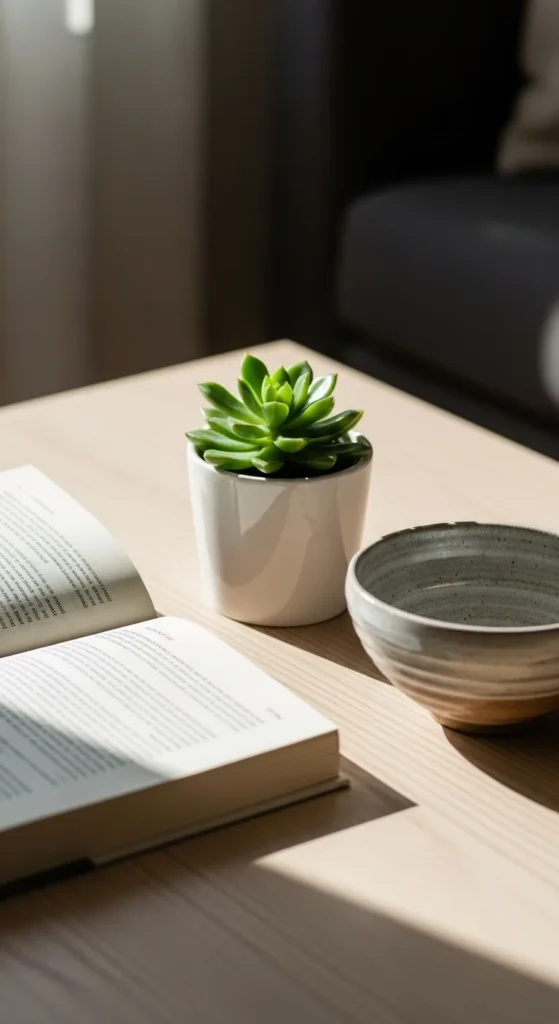
This approach keeps your home feeling calm and uncluttered.
Declutter as Part of the DIY Process
Minimalist DIY decor isn’t only about making things—it’s also about removing distractions. Decluttering helps your new decor stand out.
Simple decluttering steps:
- Clear one surface at a time
- Keep only items you use or love
- Store the rest out of sight
Think of decluttering as the final step of every DIY project. The calm comes from what you don’t see as much as what you do.
Final Thoughts: Calm Comes From Clarity
Minimalist DIY decor that feels calm is created through thoughtful choices, simple materials, and intentional styling. You don’t need perfection or expensive pieces. You just need clarity, balance, and space to breathe.
Start small. Edit often. Let your home support a slower, calmer way of living.
Save this article for later and begin creating a peaceful minimalist space today.